How Much Attic Insulation Does a Georgia Home Need?


By Anastasia Roberts • October 27, 2026

If your upstairs feels like a sauna in July and your heating bill climbs every January, the problem may be right above your head. Your attic is where most of your home's heat escapes in winter and where summer heat pours in. In many Northeast Georgia homes, the insulation up there is too thin, too old or unevenly spread to do its job.

The good news is that attic insulation is one of the simplest and most cost-effective upgrades a homeowner can make. In this guide, we explain how much insulation a Georgia attic needs, what R-value means, how to check your own attic, and when it makes sense to call a professional.

What Is R-Value?

R-value measures how well insulation resists heat flow. The higher the R-value, the better the insulation keeps heat where you want it: outside in summer and inside in winter.

R-value depends on both the type of material and how thick it is. A few inches of insulation might give you R-11 or R-19, while a deep, even layer can reach R-38 or higher. That is why depth matters so much in an attic.

R-value also depends on installation. Insulation that is crushed, packed down, gapped or blocked around fixtures will not perform to its rated value. Two attics with the same material can perform very differently depending on how it was installed.

How Much Attic Insulation Do Georgia Homes Need?

The U.S. Department of Energy recommends R-30 to R-60 for attics in our part of Georgia. If your attic already has 3 to 4 inches of insulation, the DOE recommends adding enough to reach roughly R-25 to R-38 more.

In practical terms, many attic insulation upgrades in Northeast Georgia target around R-38 to R-49. With blown-in fiberglass, that usually means a depth of somewhere around 12 to 18 inches, depending on the product. Batt insulation reaches similar R-values with fewer inches because it is denser, but it has to be cut and fit carefully to avoid gaps.

Many older homes in Jefferson, Athens, Gainesville and the surrounding area were built with R-19 or less in the attic. Over the years, that insulation settles, gets compressed during attic work, or gets damaged by moisture or pests. The result is a home that works harder to stay comfortable.

How to Check Your Attic Insulation

You can get a rough idea of your insulation level with a quick look. Wear long sleeves, gloves and a dust mask, and only step on joists or attic flooring, never on the insulation or drywall between joists.

  • Look at the joists. If you can see the tops of your ceiling joists, you almost certainly need more insulation. Proper coverage should bury them completely.
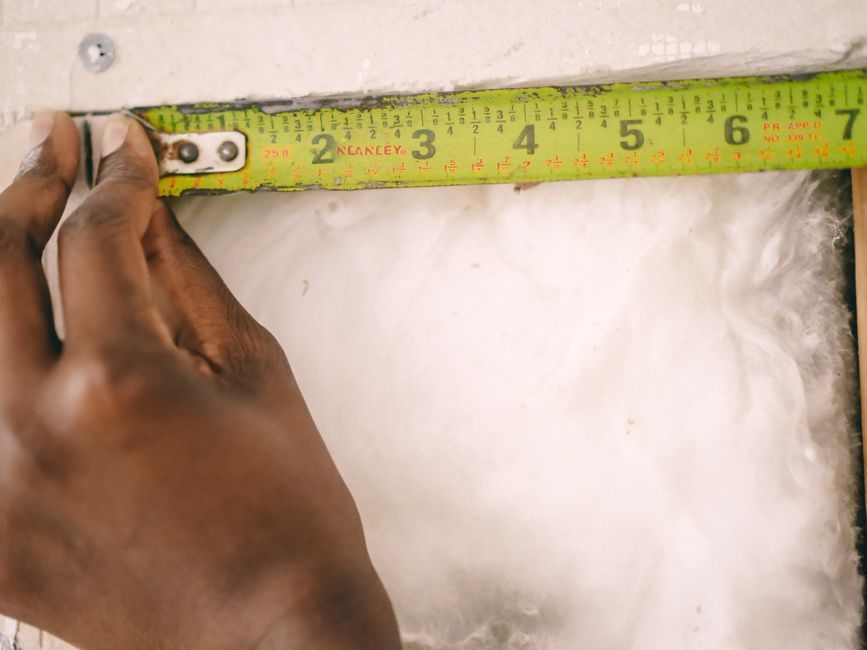
  • Measure the depth. Push a ruler gently down to the drywall in a few spots. Less than about 10 to 12 inches usually means you are below the recommended range.
  • Check for even coverage. Look for thin spots, bare patches, areas near the attic hatch, and places where insulation was moved for wiring or HVAC work.
  • Look at the condition. Insulation that is flat, stained, damp or full of debris has lost much of its value and may need to be removed rather than covered.

If anything looks off, or if you would rather not climb into a hot attic, a professional inspection gives you a clear answer.

Blown-In or Batt: Which Should You Choose?

For most existing Georgia attics, blown-in insulation is the best fit. It flows around wiring, joists and fixtures to create a seamless blanket, and it can usually be added on top of existing insulation that is still in good condition.

Batt insulation works well in new construction, attic remodels, kneewalls and open framing where bays are clean and evenly spaced. Many homes benefit from a combination of both. Learn more about both options on our attic insulation services page.

Why Installation Quality Matters

Reaching the right R-value is about more than buying enough material. Professional installers use commercial-grade insulation blowers that deliver consistent density and depth across the whole attic, so the insulation performs the way it is rated to.

Proper installation also keeps soffit vents open with baffles so your attic can breathe, avoids crushing batts, and covers hard-to-reach corners and eaves. These details are what make insulation last longer and keep working year after year.

The Bottom Line

Most Northeast Georgia attics should have R-30 to R-60 of insulation, and many older homes fall well short. If your joists are showing, your upstairs rooms are uncomfortable or your energy bills keep rising, your attic is a good place to start.

Certified Comfort of Georgia installs blown-in and batt attic insulation using state of the art equipment for longer lasting, higher quality results. Call us at 470-778-7436 or request a free estimate and we will measure your current insulation and recommend the right amount for your home.

We are a team of award-winning HVAC professionals

Give us a call for a no-obligation estimate today!


Stay up to date with the latest HVAC news, promotions, and tips to keep your system running smoothly.

Sign up by submitting your email below.

Contact Us

SHARE THIS

Latest Posts

Installer adding attic insulation to a Georgia home
By Anastasia Roberts • October 27, 2026
Hot upstairs rooms, high energy bills, visible joists? Learn 7 signs your attic insulation needs an upgrade and what Northeast Georgia homeowners can do.
Technician performing fall HVAC maintenance on a Georgia home heat pump
By Anastasia Roberts • October 19, 2026
Prepare your GA home for cool weather with 7 fall HVAC maintenance tips from Certified Comfort, including filters, airflow, heating checks, and when to call a pro.
HVAC fall maintenance in North Georgia
By Anastasia Roberts • October 9, 2026
Use these practical HVAC fall maintenance tips to save money, reduce stress, and stay comfortable through cold mornings and hot afternoons in North Georgia.
HVAC technician checking summer HVAC airflow issues
By Anastasia Roberts • September 26, 2026
Learn which HVAC airflow issues can make Georgia homes uncomfortable in summer and when to call Certified Comfort of Georgia for expert diagnosis and repairs.
Emergency AC repair technician inspecting an air conditioner in Georgia
By Wilsona Marketing Media • September 9, 2026
Need emergency AC repair services in Georgia? Learn what to do first, when to call, what repairs may cost, and how Certified Comfort of Georgia can help.
How to save money on your AC bill in Georgia summer heat
By Wilsona Marketing Media • August 20, 2026
Learn how to save money on your AC bill during Georgia summers with practical thermostat, airflow, maintenance, and energy-saving tips from local HVAC experts.
Technician checking an AC unit for summer AC warning signs
By Anastasia Roberts • August 7, 2026
Learn the key summer AC warning signs that your system may be about to fail, plus what to do before a small HVAC problem becomes an emergency.
Branded white Certified Comfort of Georgia van parked in a suburban driveway in front of a house
By Anastasia Roberts • June 22, 2026
Discover the critical signs your cooling system needs attention. Learn when to schedule HVAC maintenance this summer to avoid breakdowns and high energy bills in North Georgia.
A well-maintained outdoor air conditioning unit in a sunny yard.
By Anastasia Roberts • May 24, 2026
Learn 10 essential summer HVAC maintenance tips to keep your Jefferson, GA home cool and efficient. Expert advice on filters, airflow, and professional tune-ups.
Professional HVAC technician working on an air conditioning system
By Anastasia Roberts • May 21, 2026
Learn why hiring a licensed and insured HVAC company like Certified Comfort of Georgia is essential for safety, warranty protection, and peace of mind in 2026.
Show More